157 words, five sources, and half of them already ranking. The doorway is smaller than it looks and it is now measurable.
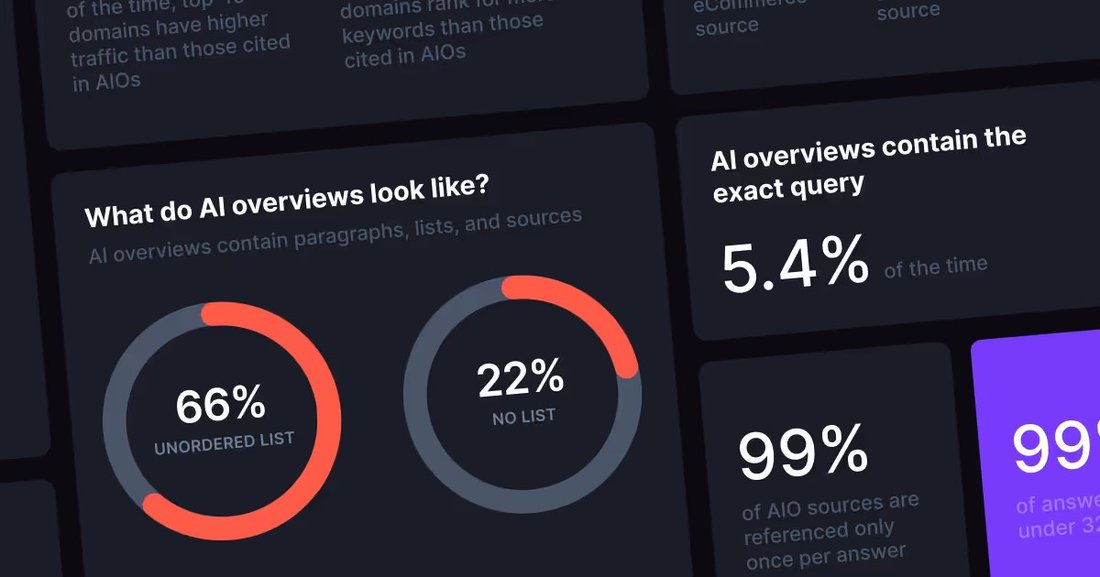
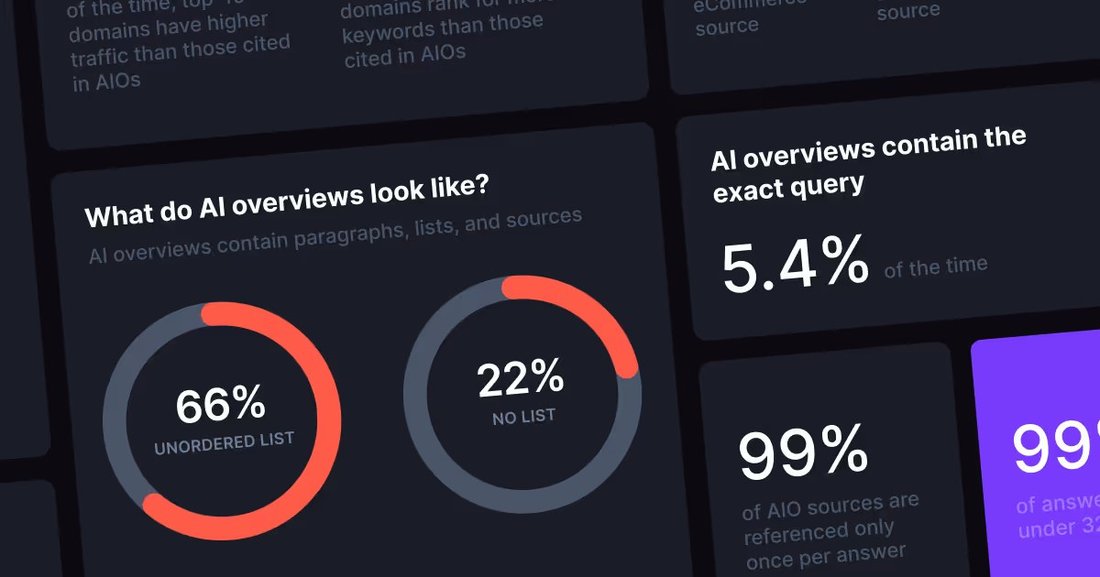
Surfer analysed 405,576 English-language Google AI Overviews and published
the shape of them. The average overview runs 157 words and cites five
sources. Ninety per cent cite eight or fewer. Ninety-nine per cent of cited sources
appear exactly once. Seventy-eight per cent are built as a list.
Just over half of the sources quoted, 52 per cent, also rank in the top ten organic
results for the same query, at an average position of five. So classic ranking still buys
most of your chances of being quoted. This sits inside the search work you already do.
The surface you used to rank on is closing
AlsoAsked measured 19.2 million items and found 97 per cent of “People Also Ask”
answers in the first week of September were AI Overviews, up from 86 per cent in August
and roughly 12 per cent fourteen months earlier. That surface has effectively gone.
Google is also rendering interactive tools, a mortgage calculator or a pH
scale, directly inside the answer. If your traffic came from a calculator or a comparison
table, the results page now ships one of its own.
Where your brand gets discussed matters more than what you publish
Ahrefs tracked citations across more than 3 million US queries. YouTube
leads with 22.9 per cent of mentions among the top 50 sources, Reddit follows at 18.5, then
Facebook at 10.1 and Instagram at 5.6. Those are not places you publish. They are places you
are talked about.
Agencies have noticed. Trevant, Crispin and Sway Group are now commissioning
creator content specifically for the mentions models pull into recommendation answers.
Zoom worked with the creator-journalist Nayeema Raza on exactly that. The agencies interviewed
by Digiday concede that measurement still lags behind familiar sales metrics, which is the
honest part of the story.
Individual creators are running the same experiment on themselves
with no budget. Courtney Johnson has kept a structured plain-text site since October 2025 and
reports 10,766 impressions and 435 clicks since launch. Colin Rocker audited his own citations
and found his LinkedIn profile quoted more often than his website.
The lever you can ask your own audience for
Google shipped an embeddable “Preferred Sources” button. A reader clicks
it, and that publisher rises across Search, Discover and News. Google says readers are twice as
likely to click a preferred source when one is available, and that over 345,000 unique sources
had already been selected by May 2026, before the embeddable version existed.
What we would do with your next quarter
Answer in the first 157 words. Use a list where the question is a list. Keep ranking,
because that is still 52 per cent of the door. Give every fact a date and a number, since a
source cited once has to stand alone. Then get named accurately somewhere off your own
domain, and put the Preferred Sources button in front of the people who already read you.
None of that is a new budget line. It is the content work you already fund, shaped so a
model can quote a paragraph of it without losing the meaning.